
Telling a Story With Serial Imagery
September 19, 2013 § Leave a comment


Through a series of drawings, we are able to examine the complexities within each composition and how they relate to each other. Each represents a different look at the same grouping of flowers. When we take the time to examine our subjects more closely and make our own decisions about what we want to say, the storyline becomes more complex. Each piece represents a unique dissection of the space around the forms and each has a prominent area of focus. By looking at the drawings together, we can see the similar nature of the flowers repeating and reaching toward the light. Take the time to explore the possibilities within your subject material. We don’t always have to draw what we see!!
Letting the Contour do the Work for You!!!
September 19, 2013 § Leave a comment
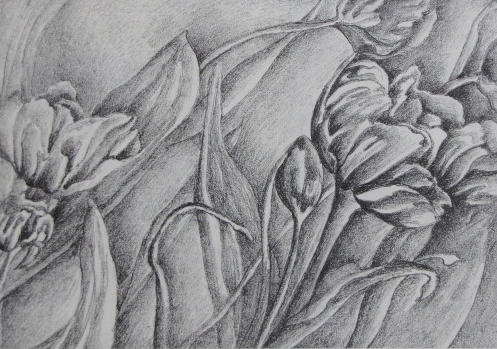

Here is the contour and finished gradation of a floral. Notice how the line drawing does most of the work for you. It reveals the light source, which comes from the right. It tells a story of flowers nestling into their stems as they bend and reach upward. The composition gives a great sense of rhythm and repetition and shows an area of focus which is the flower on the right. Most importantly, it lets your personality shine through. The gradation should not require as much effort as the preplanning, expression, and the hard work have already been done!
Using the Space Around the Subject
September 17, 2013 § Leave a comment

Here the forms are generally dark in value and the space around them are light, providing a stark contrast. There is also a give and take between the light palm leaves and the dark; creating a sense of interplay and a link with the frontal shapes and the ground. Think of the subjects as figures and the space as ground. Take the time to examine how you can activate portions of the composition usually not thought about by allowing the plants to break out of the borders, create dynamic movement, and instill interesting connections within those areas. Allow a real give and take between the positive figures and the negative space.
Hans’ Reflection
September 17, 2013 § Leave a comment

This drawing was part of a series on the subject of reflection. The drawing could also take on the meaning of light versus dark, positive versus negative, and the notion that each of us reflects on oneself. The surface could be based upon anything; water, reflectivity, or tranquility.
Opening up the Story Line; A Two Part Composition
September 6, 2013 § Leave a comment
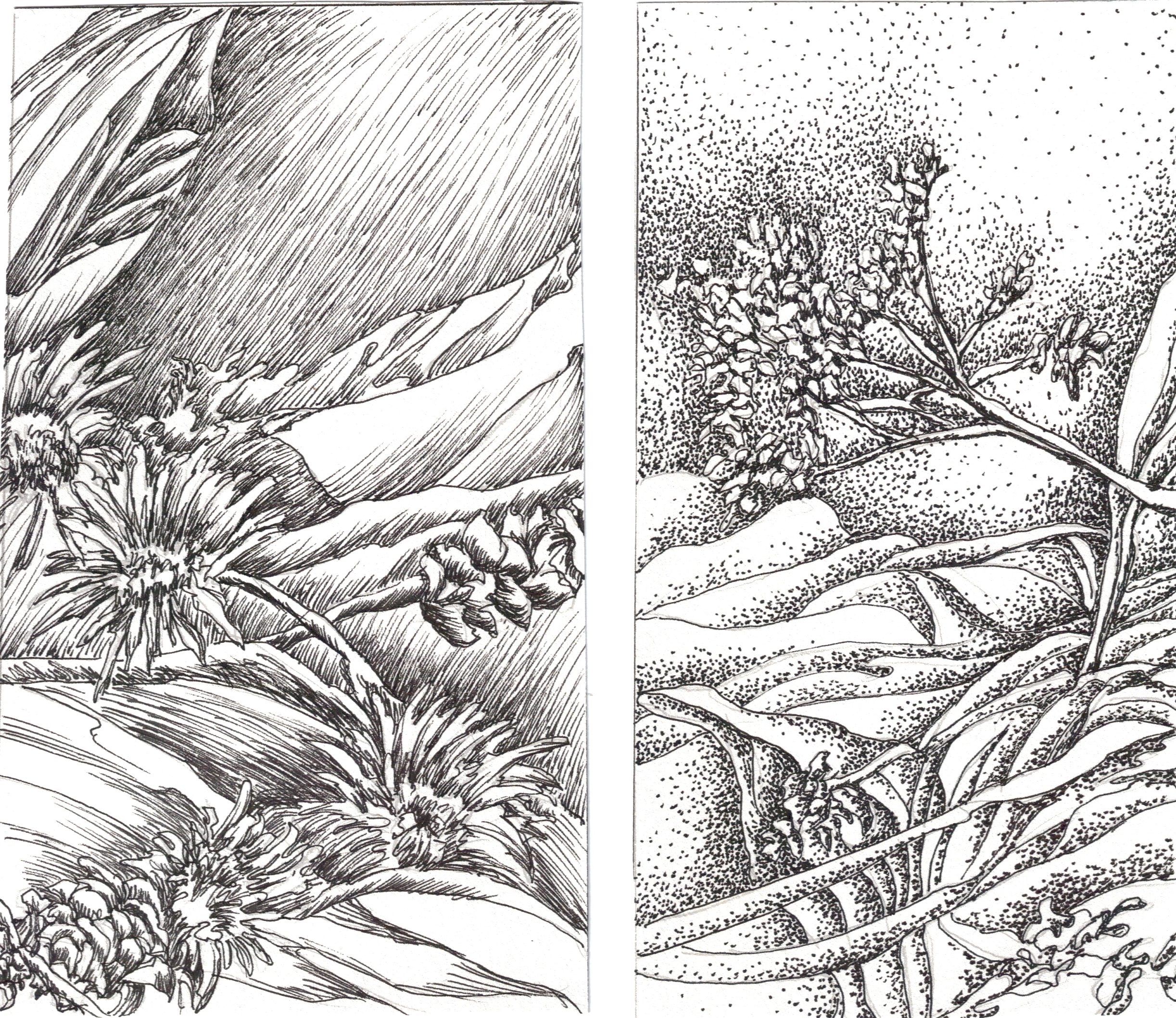
With this still life, I chose to depict it in two parts; one in hatching and the other stippling. I enjoy seeing how the character of the composition changes when using different textural techniques.
Importance of the Negative Space
September 6, 2013 § Leave a comment

Too often we pay little attention to the space surrounding our subject. By defining the borders and allowing the forms you are portraying to meander off and out of the picture plane, the composition is opened up to new possibilities, When the viewer is allowed to imagine what happens outside of the border, you begin to create interesting relationships with the space and form.
The Hand as an Extension of the Eye
August 29, 2013 § Leave a comment

Here is another blind contour done with brush and ink. The lack of self control becomes even greater using a fluid medium. The blind approach is used to remove the desire for perfection and allow a more emotional side of yourself to be revealed. Each of us has a unique contour. Take the time to explore your personal statement. The control can come later!
Sensitive Drawing
August 29, 2013 § Leave a comment

One of the most revealing and purely emotive joys of drawing is the blind contour. By looking at the subject and not at the paper, a sensitive and personal reflection of who we are is revealed.
Working with Serial Imagery
August 27, 2013 § Leave a comment




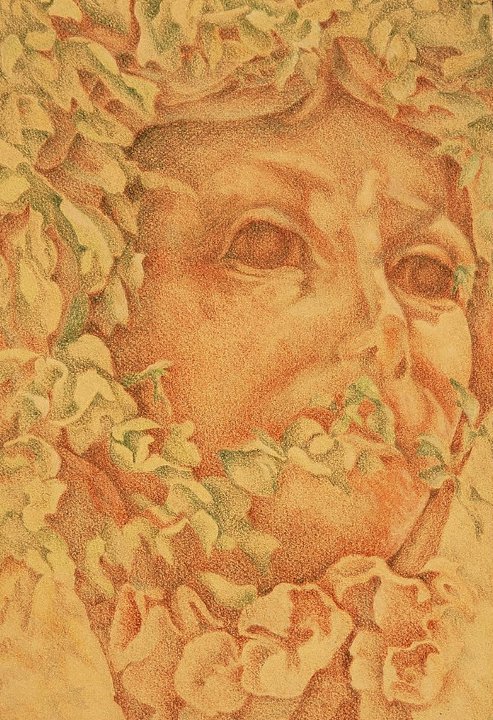
When attempting to tackle the big world of composition, it is important to not pigeonhole yourself by allowing just one option. Too many times, when starting out with drawing and painting and someone would ask “Why did you depict your subject this way?”, “I would say well that is because it looked like that”. I didn’t realize I had the power to change my images. Instead of taking things at face value and saying only one thing about our subjects, we must challenge ourselves to explore our options. When looking at a subject move it, walk around it, step in to examine it closely, look at it in different lighting. Some examples of serial imagery are a zoom in for the first piece, then step back, and step back again. Try three or four different vantage points. Add something to the composition or take something away. Try the subject in different mediums or techniques; one in stippling, one in scribble, one in hatching, and on and on. By limiting ourselves to spitting out just one portrayal, we never really explore the full storyline a subject has to offer. I’m including a series of color drawings of the goddess Persephone seen in different seasons, colors, and with varying settings,
My Friend Hazel
August 27, 2013 § Leave a comment
 I’m posting a drawing I completed of Hazel in the nursing home. She was a dear friend and a wonderful piano teacher!! This drawing perhaps goes further than most in telling a story of a person reflecting upon her life as she gazes out the window. Notice the artistic devices of the dog sitting at her feet looking inward and the plant as it points outward leading the viewer’s eye throughout the composition
 and supporting the story line.

 Dr. Mary McNaughton and Drawing